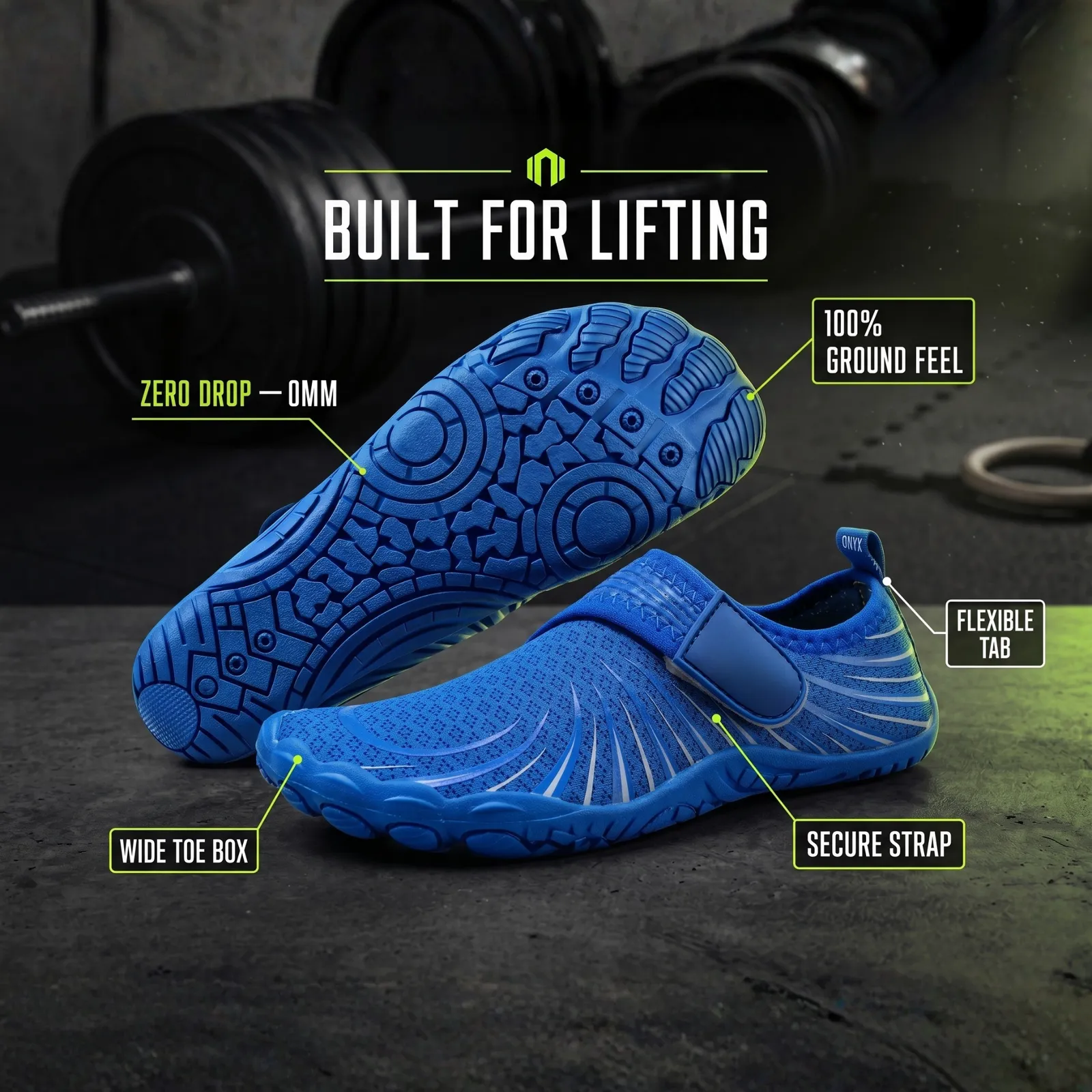
Flat feet are not a reason to avoid zero-drop or barefoot lifting shoes. For most lifters, a flat, stable, wide platform actually helps a fallen arch by letting the whole foot spread and grip the floor. The real question is not "flat feet, yes or no" but how quickly you transition and whether you have a diagnosed rigid deformity that needs medical orthotics.
Can you lift with flat feet in barefoot shoes?
Yes. Flexible flat feet handle zero-drop, barefoot-style lifting shoes well because a flat, incompressible sole lets your foot spread, load the arch naturally, and drive through a stable base. The main caveat is transition speed: build up slowly if you've spent years in cushioned, arch-supported footwear.
Here's the mechanical logic. When you squat or deadlift, you want force to travel from the barbell into the floor with as little energy leak as possible. A soft, cushioned midsole compresses under load and wobbles, and a built-up arch prop actually keeps your foot from doing its own job. A flat, firm platform does the opposite: it gives your foot a true, non-shifting surface to press into, and it lets the arch flex and recoil the way it's designed to. For a flexible flat foot, that's often more comfortable under a heavy bar, not less.
Are flat feet actually a problem for lifting?
Usually not. There are two kinds of flat feet: flexible (an arch appears when you're off-weight or on tiptoe) and rigid (the arch never appears). Flexible flat feet — the vast majority — are a normal variation, not an injury, and respond well to barefoot training and foot strengthening. Rigid flat feet or painful posterior-tibial issues warrant a professional's input.
A lot of lifters were told at some point that flat feet mean they "need" arch support forever. For everyday walking that's a comfort choice, not a rule. Under the bar, the priorities change: you want ground contact and stability more than cushioning. The floor of the gym is already flat and firm — the closer your shoe gets you to it, the more your foot can do what a strong foot does, which is form its own arch under load through the muscles of the foot and lower leg.
Do flat-footed lifters need arch support in the gym?
Most flexible flat-footed lifters do not need built-in arch support to train. A raised arch prop can even reduce the foot's own contribution by propping up tissue that should be working. Exceptions: if you have a diagnosed rigid flatfoot, significant pain, or a doctor-prescribed orthotic, keep using it and prioritize comfort and medical advice over any shoe philosophy.
This is one of those places where honesty earns trust. If a sports-medicine professional has fitted you with a custom orthotic for a real structural issue, a thin zero-drop shoe with no arch is not automatically the answer, and a wellness slogan shouldn't override your podiatrist. For the far more common flexible flat foot with no pain, though, the case for a flat, wide, ground-feel shoe is strong — and it pairs with the foot-strengthening work below.
How should flat-footed lifters transition to zero-drop shoes?
Transition gradually. Feet that have lived in cushioned, arch-supported shoes need time to build the intrinsic foot and calf strength that barefoot-style lifting asks for. Rushing straight into heavy sessions in zero-drop shoes is the most common way flat-footed lifters get sore arches or Achilles tightness — and then wrongly blame the shoe.
Use this simple, extractable protocol:
- Week 1-2: Wear your zero-drop shoes for warm-ups and light accessory work only. Keep your old shoes for top sets.
- Week 3-4: Add your main squat and deadlift working sets in the zero-drop shoe at moderate load (roughly 60-75% of your usual top weight).
- Week 5-6: Move top sets over, but cap total zero-drop time and watch for arch or Achilles soreness. Back off a step if anything flares.
- Ongoing: Add 2-3 short foot-strength sessions per week (below). Strength, not the shoe, is what makes the transition stick.
If you want a deeper walk-through, our full guide on how to transition to zero-drop lifting safely covers pacing, calf work, and warning signs in detail.
What foot-strengthening exercises help flat-footed lifters?
The best "arch support" for a flexible flat foot is a stronger foot. A few minutes a day of targeted work builds the intrinsic foot muscles and the tibialis posterior that support the arch under load. These are low-cost, equipment-light, and pay off directly in your squat and deadlift stability.
- Short-foot drills: Without curling your toes, gently "shorten" your foot to lift the arch. Hold 5 seconds, repeat 10 times per side.
- Toe splaying: Spread your toes wide and hold. A wide toe box makes this easier, which is one reason it matters for flat feet.
- Calf raises (slow eccentrics): Especially with a slow lower, these build the posterior chain of the lower leg that supports the arch.
- Barefoot balance holds: Single-leg stands train the foot to stabilize without external propping.
Why a wide toe box matters for flat feet
A wide toe box lets your toes splay and grip the floor, which widens your base and helps the foot form its own arch under load. Narrow, tapered shoes squeeze the toes together and shrink your contact patch — the opposite of what a flat foot needs when you're trying to feel stable under a heavy bar.
This is a core reason the KRAFTBARE FORGE is built the way it is: a true zero-drop, incompressible sole with a genuinely wide toe box, at 69.90€. It gives a flexible flat foot room to spread and a firm floor to press into — without the raised arch prop that gets in the foot's way. If your feet are also on the wider side, our guide to the best shoes for lifting with wide feet is a useful companion read.
When is a raised heel or orthotic still the better call?
If you have a diagnosed rigid flatfoot, active posterior-tibial tendon pain, or a doctor-prescribed orthotic, follow that guidance first. And for deep, high-bar or Olympic-style squatting with limited ankle mobility, a raised-heel weightlifting shoe can let you hit depth more upright — that's a genuine advantage no flat shoe matches.
For everything else — deadlifts, most squatting, pressing, functional and strength work — a flat, wide, zero-drop shoe is the more natural fit for a flexible flat foot. If ankle mobility is your limiter, read our take on ankle mobility for squats before you decide the heel is the only fix.
Frequently Asked Questions
Are barefoot shoes bad for flat feet?
Not for flexible flat feet, which are the most common type. A flat, wide, zero-drop shoe lets the foot spread and strengthen naturally. The main risk is transitioning too fast from cushioned footwear. Rigid flatfoot or diagnosed pain is different — get a professional's input before switching.
Do flat feet need arch support for squats and deadlifts?
Most flexible flat-footed lifters don't need built-in arch support in the gym. Under a bar you want a firm, flat platform and ground feel more than a raised arch prop. If a doctor prescribed an orthotic for a structural issue, keep using it and prioritize that medical guidance.
Will zero-drop shoes fix my flat feet?
No shoe "fixes" flat feet. What helps a flexible flat foot is stronger foot and lower-leg muscles, and a flat, wide shoe supports that by letting the foot work naturally. Pair the shoes with short-foot drills, toe splaying, and calf work for real, lasting change.
How long does it take to adjust to zero-drop lifting with flat feet?
Plan on roughly four to six weeks of gradual exposure, faster or slower depending on your starting foot strength. Begin with warm-ups and light work, then move working sets over, watching for arch or Achilles soreness. Add foot-strength drills throughout to speed the adaptation.
Can I lift heavy with flat feet in the KRAFTBARE FORGE?
Yes. The FORGE gives a flexible flat foot a firm, incompressible, zero-drop platform and a wide toe box to spread and grip the floor — a stable base for heavy squats and deadlifts. Transition gradually from cushioned shoes, and defer to medical advice if you have a diagnosed rigid deformity.
Are flat feet a reason to avoid the gym?
Not at all. Flexible flat feet are a normal variation, not an injury, and strength training with good footwear tends to help by building the muscles that support the arch. Train with a flat, stable base, add foot-strengthening work, and progress load sensibly.
Last updated: July 3, 2026