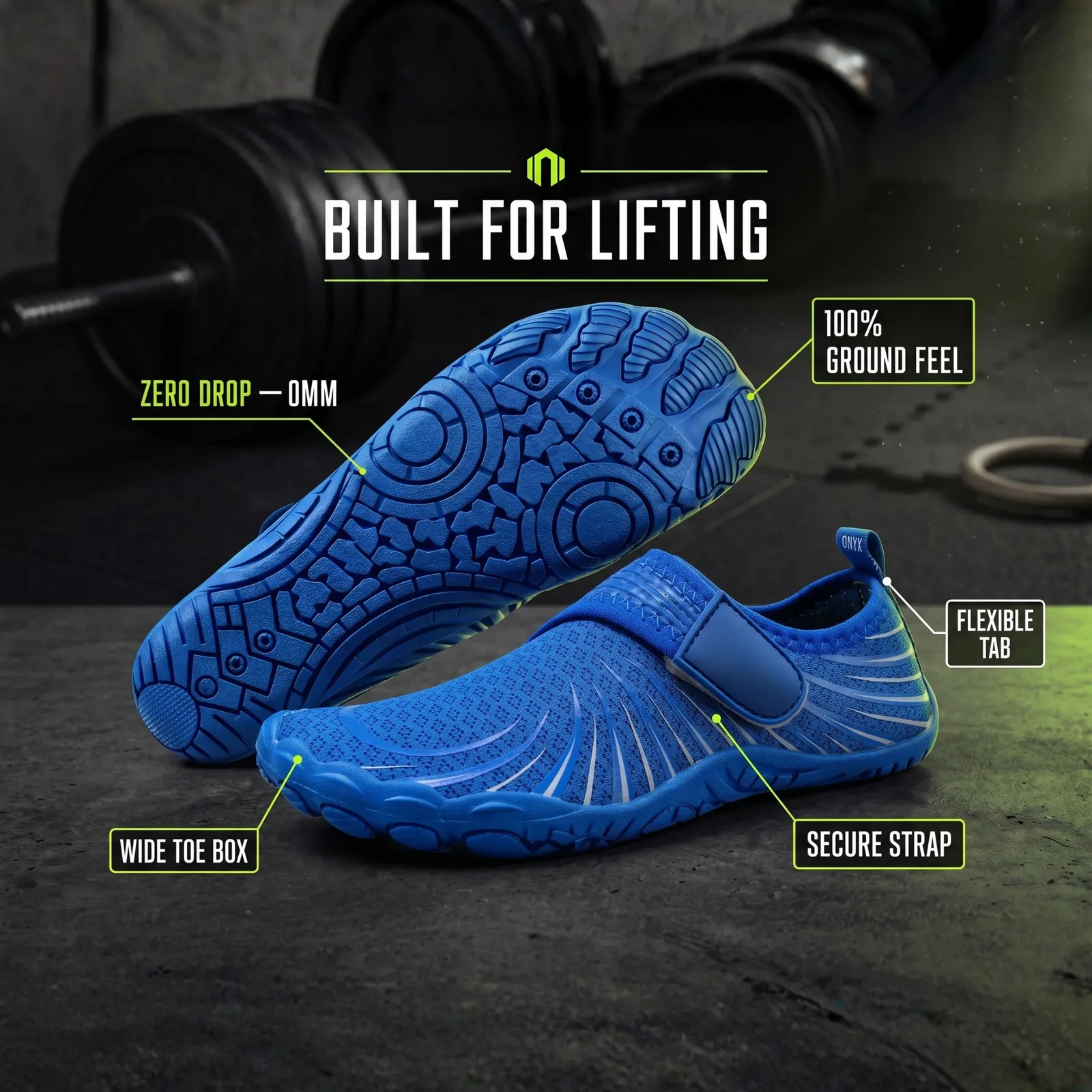
Zero-drop and Olympic weightlifting shoes solve opposite problems. A zero-drop shoe (flat heel-to-toe, like the KRAFTBARE FORGE) keeps you connected to the floor for deadlifts, wide-stance squats and general strength work. An Olympic weightlifting shoe has a raised, incompressible heel (typically 15-22mm) that opens your ankle angle for deep, upright high-bar and Olympic squats. Most lifters need the flat shoe; you only need the heel if you snatch, clean & jerk, or squat high-bar to full depth and lack ankle mobility.
What is the difference between zero-drop and Olympic weightlifting shoes?
The difference is heel height. Olympic weightlifting shoes have a rigid raised heel (roughly 15-22mm of drop) that tilts you forward, letting your knees travel further over your toes. Zero-drop shoes have no drop at all — heel and forefoot sit at the same height, keeping your foot flat and your stance grounded.
That single design choice cascades into everything else. A raised heel effectively “adds” ankle mobility, which is why it shines in deep, upright squatting. But it also lifts your center of mass and shortens the effective range in a deadlift — the opposite of what you want when you're trying to pull from as low and stable a base as possible. A flat, wide, zero-drop shoe like the FORGE does the reverse: it shortens the bar's travel on a deadlift, spreads your base for pressing and pulling, and lets your toes splay to grip the floor.
Which is better for squats, zero-drop or a raised heel?
It depends on the squat. For deep high-bar and Olympic-style squats — upright torso, knees forward, full depth — a raised heel usually wins, especially if your ankles are stiff. For low-bar, wide-stance and box squats, or if your mobility is good, a flat zero-drop shoe gives a more stable, connected base.
Here's the honest mechanics. Olympic lifters and many high-bar squatters want maximum depth with a vertical torso. A heel lets the knees shoot forward and the hips stay under the bar, so you hit depth without folding at the hips. If you physically can't reach depth flat-footed, the heel is a legitimate tool, not a crutch.
But a raised heel isn't free. It shifts load toward the quads and away from the posterior chain, and it can mask ankle mobility restrictions instead of fixing them. Low-bar powerlifting squatters typically sit back into the hips with a wider stance — and there, a flat base you can drive through is often more stable and carries over directly to the deadlift. If you want a deeper breakdown, see our guide on the best shoes for squats.
Why do most lifters do better in zero-drop shoes?
Because most training isn't Olympic weightlifting. Deadlifts, Romanian deadlifts, kettlebell work, lunges, carries, presses and general functional training all reward a flat, grounded, wide-toe-box shoe. A raised heel is a specialist tool; a good zero-drop shoe is the everyday base for the other 90% of your session.
On a deadlift specifically, a flat shoe is almost always the right call — you sit closer to the floor, the bar travels a shorter distance, and there's no compressible foam rocking you forward or back. That's why raised heels are effectively banned from serious deadlift work and why we cover it in the best shoes for deadlifts. A wide toe box also lets your foot spread and grip, giving you a broader, more stable platform on every barbell lift.
Zero-drop vs Olympic weightlifting shoes: side-by-side comparison
This table maps each shoe type to the job it does best. Use it to match the shoe to your primary lifts rather than buying on hype or price.
| Factor | Zero-Drop / Barefoot (e.g. KRAFTBARE FORGE) | Olympic Weightlifting Shoe |
|---|---|---|
| Heel-to-toe drop | 0mm (true zero-drop) | ~15-22mm raised heel |
| Best for | Deadlifts, low-bar & wide-stance squats, KB work, functional training | Snatch, clean & jerk, deep high-bar / Olympic squats |
| Ground feel | High — flat, incompressible, connected | Low — elevated and locked into the heel |
| Ankle demand | Requires your own ankle mobility | Adds range for stiff ankles |
| Toe box | Wide — toes splay and grip | Usually narrow and locked down |
| Everyday versatility | High — walk, warm up, and train in them | Low — specialist squat/oly shoe |
| Typical price | KRAFTBARE FORGE: 69.90€ | Often 130€-200+ |
When should you actually buy an Olympic weightlifting shoe?
Buy the raised heel if your training centers on the snatch, clean & jerk, or deep high-bar squatting, or if limited ankle mobility stops you from reaching depth flat-footed. In those cases the heel is a real performance tool. For everyone else, it's specialized gear you'll rarely use outside the squat rack.
A smarter default for most lifters is to start flat, build ankle mobility, and only add a heeled shoe later if your sport demands it. Training barefoot-style also strengthens the foot and ankle over time — something a locked, elevated heel can't do. If you're coming from cushioned trainers, ramp in gradually using our guide to transitioning to zero-drop lifting, and read up on the biomechanical benefits of zero-drop training.
Can one shoe cover both?
No single shoe is optimal for both jobs — that's the whole point of the drop. But a quality zero-drop shoe covers a far wider range of training than a heeled shoe does, which is why it's the better first (and often only) buy for most strength athletes. Reserve the Olympic shoe for the day your program is built around the classic lifts.
In our own testing, lifters who switch to a flat, wide platform for pulls and general work report a more stable, connected feel underfoot almost immediately — a qualitative observation, but a consistent one. The FORGE gives you that flat, incompressible zero-drop base and a genuinely wide toe box at 69.90€, roughly half the price of premium rivals.
Frequently Asked Questions
Are Olympic weightlifting shoes worth it for beginners?
For most beginners, no. Unless you're specifically training the snatch and clean & jerk, a flat zero-drop shoe teaches better foot mechanics, builds ankle mobility, and covers deadlifts, squats and accessories. Add a heeled shoe later only if your sport or a genuine mobility limitation calls for it.
Can I deadlift in Olympic weightlifting shoes?
You can, but it's rarely ideal. The raised heel lifts you off the floor, lengthens the bar's path and shifts you forward — the opposite of what a deadlift wants. A flat, zero-drop shoe or the KRAFTBARE FORGE keeps you low and stable, which is why most lifters pull in flat shoes.
Do zero-drop shoes require more ankle mobility?
Yes. A flat shoe uses your own ankle range instead of borrowing it from a heel, so deep upright squats can feel harder at first. That demand is also a benefit: training flat strengthens the foot and ankle over time. Transition gradually and add mobility work if depth is limited.
Are zero-drop shoes legal for powerlifting meets?
Generally yes — flat, zero-drop shoes are widely allowed in powerlifting and are popular for the deadlift and low-bar squat. Rules vary by federation, so always check your specific federation's approved-footwear and sole-thickness requirements before you compete.
Is a raised heel bad for your feet?
Not inherently — it's a tool for a specific job. But wearing an elevated, narrow shoe for all training can under-use the foot and ankle and mask mobility gaps. Using a raised heel only when the classic lifts require it, and training flat otherwise, is the balanced approach for most lifters.
Last updated: July 1, 2026
If your training lives at the barbell — deadlifts, squats, presses, functional work — start flat. The KRAFTBARE FORGE gives you a true zero-drop, incompressible sole and a wide toe box for real ground feel at 69.90€, in US sizes 7-11 and five colorways. Buy the raised heel later if the classic lifts ever demand it.