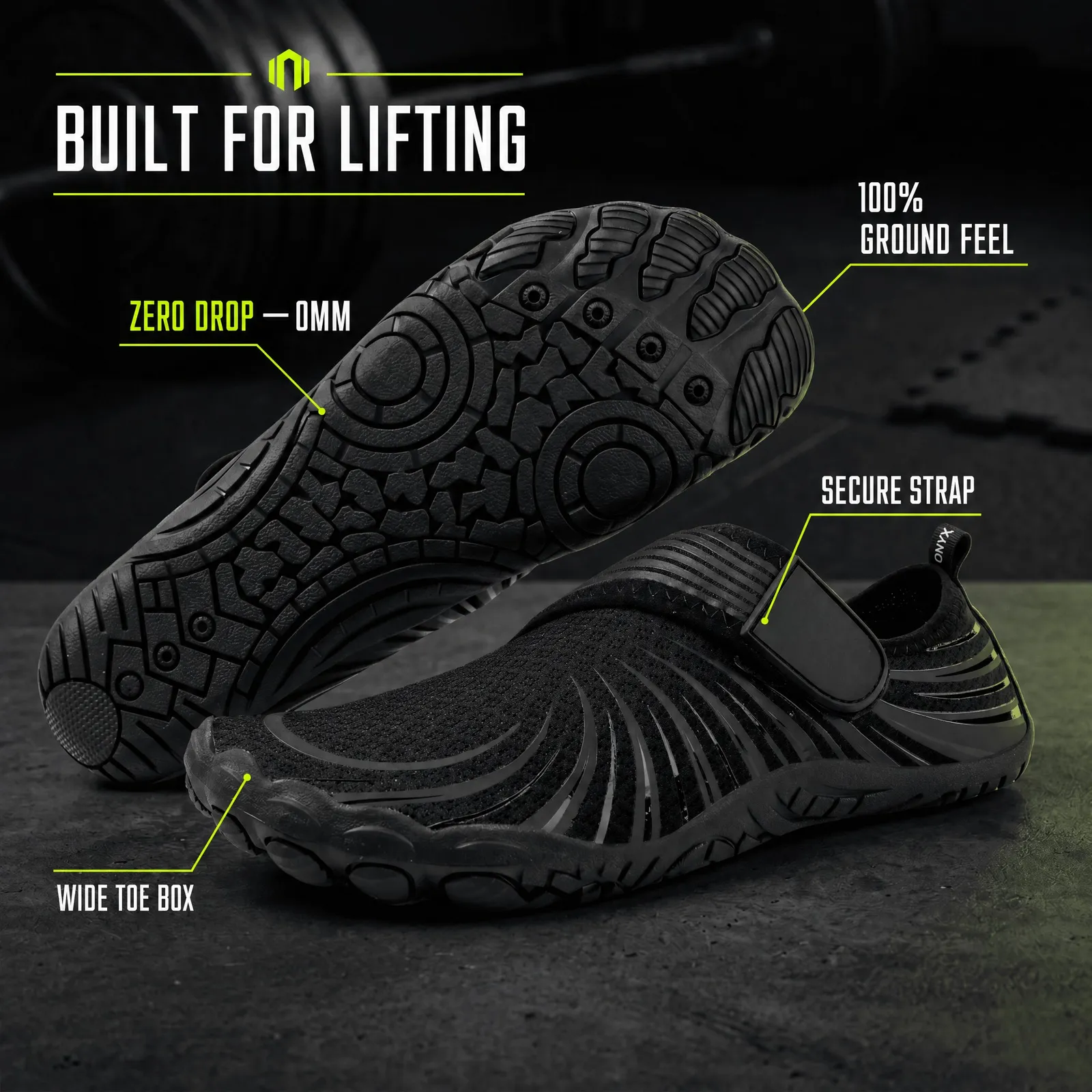
Here is the honest answer: zero-drop shoes do not instantly give you more squat depth — a raised heel does that by reducing how much ankle flexibility you need. What zero-drop shoes do is expose and then build your real mobility over time. By keeping your foot flat, they force your ankles, hips, and feet to earn depth honestly, and for many lifters that gradually produces a deeper, stronger, more stable squat without a heel crutch. So the short version: raised heel for depth today, zero-drop for mobility and a better squat long term.
Do zero-drop shoes make you squat deeper?
Not by themselves, and not immediately. Squat depth is limited mostly by ankle dorsiflexion (how far your knee can travel forward over your toes) plus hip mobility. A raised-heel shoe reduces the dorsiflexion your ankle has to produce, so you can drop into depth right away. A zero-drop shoe removes that assist — your whole foot stays flat, so your ankles have to do the full job.
If your ankle mobility is already good, you will hit depth just fine in a flat shoe and enjoy a more grounded, stable base. If your ankles are stiff, a flat shoe will feel like it limits your depth at first — not because the shoe is bad, but because it is showing you a mobility restriction the heel was hiding. That is useful information, and it is fixable.
Why does heel height change squat depth?
It comes down to ankle angle. To squat deep with an upright torso, your shin has to travel forward over your foot — that forward travel is ankle dorsiflexion. A raised heel pre-tilts your shin forward, so you reach the same depth with less ankle range. It is a genuine mechanical help, which is exactly why Olympic lifters wear heeled shoes for deep, upright squats.
The tradeoff is that the heel does the mobility work for you, so your ankles never have to improve. A zero-drop shoe keeps your foot flat and lets your body build the range itself. Neither is wrong — it depends on whether your goal is maximum depth today or better mobility over time. Our guide on ankle mobility for squats digs into this tradeoff in detail.
Zero-drop vs raised heel for squat depth
Here is how the two approaches compare for hitting and building depth.
| Factor | Zero-drop / flat shoe | Raised-heel Olympic shoe |
|---|---|---|
| Depth today | Depends on your ankle mobility | Instantly easier, especially with stiff ankles |
| Long-term ankle mobility | Builds it — ankles do the full range | Does the work for you; mobility stays flat |
| Stability & ground feel | Excellent — whole foot planted | Good, but you sit higher off the floor |
| Carries over to deadlifts | Yes — same flat shoe works | No — heel raises the bar; you swap shoes |
| Best for | Mobility, all-round lifting, one-shoe simplicity | Deep, upright squatting with limited ankles |
If your priority is a bigger, more upright squat right now and you mostly Olympic squat, a heel is a reasonable tool. If you want to fix the underlying restriction and keep one shoe for every lift, zero-drop is the long game — see zero-drop vs Olympic weightlifting shoes for the full comparison.
Can barefoot shoes improve your mobility over time?
Yes, indirectly — and this is the real case for zero-drop. Training in a flat, wide-toe-box shoe keeps your ankles working through their full range and lets your toes spread and your foot muscles engage instead of being propped up and squeezed. Over weeks and months of squatting flat (plus dedicated mobility and foot work), many lifters find their honest, unassisted depth improves.
The shoe is not a stretching device; it is an environment that stops masking restrictions and encourages your feet and ankles to get stronger and more mobile. Pair it with targeted work — our foot and ankle strengthening protocol is a good place to start — and the depth tends to follow.
How to squat deeper in zero-drop shoes
If depth feels tight when you switch to flat, do not force it — build it. This approach adds range without grinding your joints.
- 1. Meet your honest depth. Squat only as deep as you can with a flat back and heels down. Range you own beats range you fake.
- 2. Widen and turn out your stance. A slightly wider stance with toes turned out a touch reduces the ankle demand and often unlocks more depth immediately.
- 3. Grip the floor. Spread your toes and screw your feet out. A wide-toe-box shoe like the KRAFTBARE FORGE gives your toes room to splay for a stable base.
- 4. Train ankle dorsiflexion. Add knee-over-toe ankle stretches, calf work, and deep goblet squat holds a few times a week.
- 5. Transition gradually. If you are coming from a heeled or cushioned shoe, ease in — our transition guide shows how to add flat-shoe volume without overloading your calves and Achilles.
What makes the KRAFTBARE FORGE good for squatting?
The KRAFTBARE FORGE is a true zero-drop barefoot lifting shoe with a flat, incompressible sole and a wide toe box — the environment that builds an honest, stable squat. The flat sole keeps you balanced over the mid-foot; the wide toe box lets your toes spread and grip for a broader base; and the thin, firm platform gives you the ground feedback that flat-shoe squatting is all about.
It will not hand you depth the way a heel does — and we would not pretend otherwise — but it is the tool that helps you earn depth and keep it for every lift. It is also the same shoe you will want for deadlifts, bench, and accessories, so nothing changes between movements. At 69.90€, about half the price of premium zero-drop rivals, the FORGE comes in US sizes 7–11 and five colorways: Onyx Black, Chalk, Volt, Steel, and Raw Pink.
Frequently Asked Questions
Do zero-drop shoes help you squat deeper?
Not instantly. A raised heel adds depth right away by reducing the ankle mobility you need. Zero-drop shoes keep your foot flat, so depth depends on your own mobility — but training in them helps build that mobility over time for a deeper, unassisted squat.
Are zero-drop shoes bad for squat depth?
No, but they expose your true ankle mobility. If your ankles are stiff, you will feel more limited at first than in a heeled shoe. That is a signal to build mobility, not a flaw in the shoe. With good ankle range, flat shoes give an excellent, stable squat.
Should I squat in a heeled shoe or a flat shoe?
Choose a heeled Olympic shoe if your goal is maximum, upright depth today and you have limited ankle mobility. Choose a flat, zero-drop shoe if you want to build mobility, prefer maximum ground feel, and want one shoe that also works for deadlifts and bench.
Can barefoot shoes improve ankle mobility?
Indirectly, yes. By keeping your foot flat and letting your toes spread, they encourage your ankles and feet to work through a fuller range instead of being propped up. Combined with dedicated mobility and foot-strengthening work, many lifters see their honest depth improve.
How long until I can squat deep in zero-drop shoes?
It varies. Lifters with decent ankle mobility adapt in a few sessions. If you are stiff, expect several weeks to a few months of consistent flat-shoe squatting plus ankle and calf mobility work. Transition gradually to avoid overloading your calves and Achilles.
Do I need good ankle mobility for zero-drop squats?
You need reasonable ankle dorsiflexion to hit full depth in a flat shoe. If you lack it, you can still squat to your honest depth, widen your stance, and build mobility over time. A raised heel is the shortcut; zero-drop plus mobility work is the long-term fix.
Ready to build an honest, grounded squat? The KRAFTBARE FORGE zero-drop lifting shoe gives you a flat, wide platform to develop real depth and mobility — and it works for every other lift too — for 69.90€, about half the price of premium rivals.
Last updated: July 7, 2026