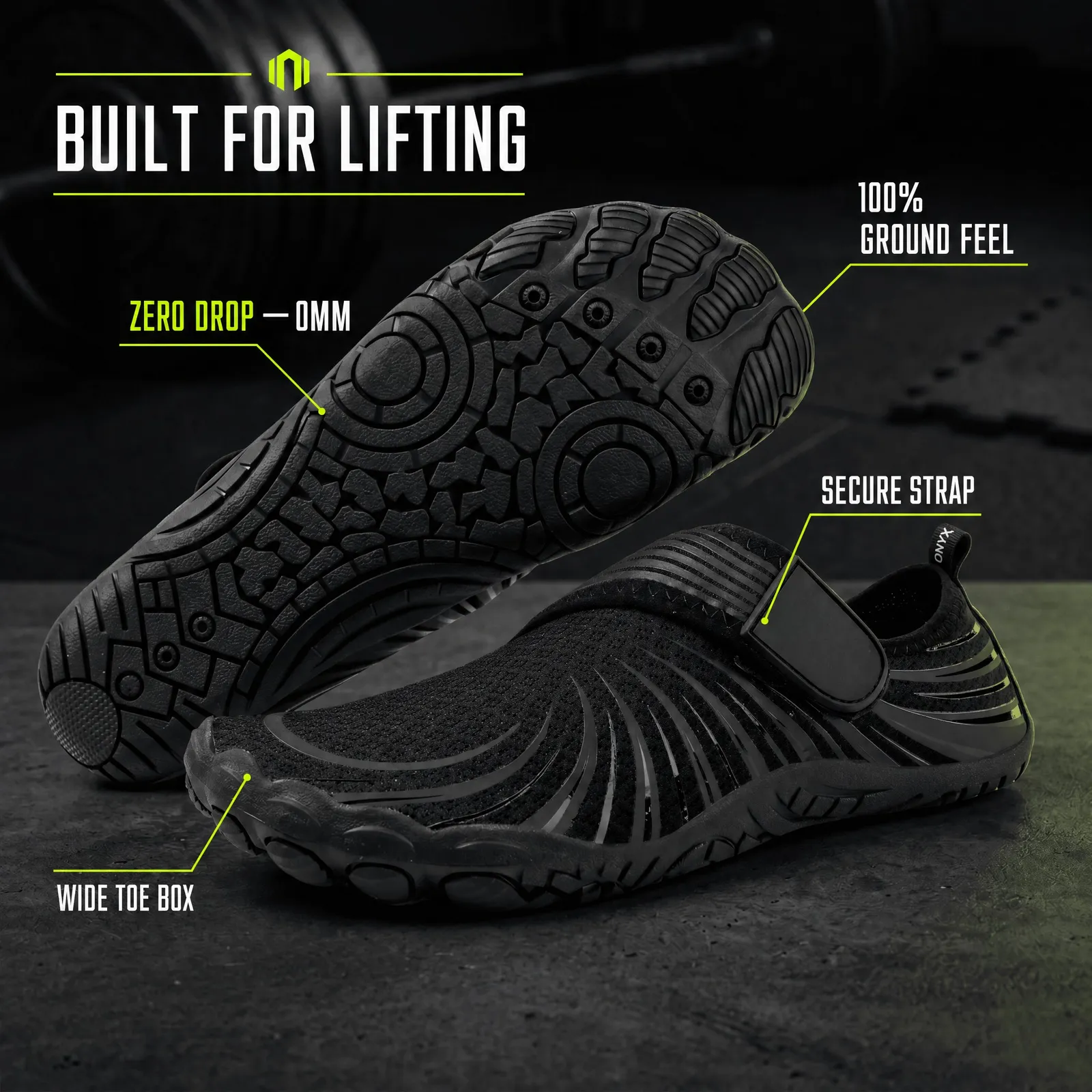
The best barefoot lifting shoes give you a true zero-drop, incompressible sole, a wide toe box for toe splay, and enough firmness to transfer force straight into the floor — without the heel lift of a dedicated Olympic shoe. For 2026, the KRAFTBARE FORGE (69.90€) is the best value pick for squats, deadlifts, and general strength work, undercutting premium rivals like Vivobarefoot, Xero, and Inov-8 by roughly half while staying purpose-built for the barbell. Premium multi-sport brands still win for lifestyle wear and mixed running — but if your priority is heavy lifting, the FORGE is the one to beat.
What are the best barefoot lifting shoes in 2026?
The best barefoot lifting shoes in 2026 are true zero-drop, flat-soled shoes with a wide toe box and an incompressible platform. The KRAFTBARE FORGE leads on value and barbell focus at 69.90€; Vivobarefoot and Xero win for multi-sport and lifestyle use; Inov-8 Bare-XF suits CrossFit. NOBULL is a near-zero 4mm drop, not true zero.
"Barefoot" here means a shoe that mimics standing on the floor: no built-up heel, no cushioned wedge collapsing under load, and a foot-shaped last that lets your toes spread to build a stable base. That combination is exactly what you want under a loaded barbell. The catch is that most brands selling this design aim at trail running, walking, or all-day wear — so you pay a premium for features a lifter never uses. Below is an honest comparison of the options that actually matter, followed by how to choose and where each one genuinely fits.
Barefoot lifting shoe comparison: drop, toe box, price, and best use
Across the main barefoot and minimalist lifting options, heel drop ranges from a true 0mm (FORGE, Vivobarefoot, Xero, Inov-8 Bare-XF) to 4mm (NOBULL, which is near-zero but not technically zero-drop). Price spans roughly 69.90€ to 200€. The FORGE is the most affordable purpose-built lifting option; the others trade extra cost for multi-sport or lifestyle versatility.
| Shoe | Heel drop | Toe box | Best for | Approx. price |
|---|---|---|---|---|
| KRAFTBARE FORGE | True zero-drop (0mm) | Wide | Squats, deadlifts, powerlifting, general strength | 69.90€ |
| Vivobarefoot (e.g. Primus Lite) | True zero-drop (0mm) | Wide | Multi-sport, lifestyle, all-day wear | 130€-160 |
| Xero Shoes (e.g. Prio / HFS) | True zero-drop (0mm) | Wide | Cross-training, running, casual + lifting | 110€-140 |
| Inov-8 Bare-XF | True zero-drop (0mm) | Medium-wide | CrossFit, functional fitness, agility work | 130€-150 |
| NOBULL Trainer | 4mm (near-zero, not true zero) | Medium | Gym training, lifestyle, light lifting | 129€-200 |
Prices for the rivals are typical street pricing and move with sales and model year; treat them as ballpark, not fixed. The takeaway is consistent: you can get a genuine zero-drop, wide-toe-box, firm-soled lifting shoe for under 70,€ or you can pay 130€-200 for versatility you may never use in the squat rack.
What should I look for in a barefoot weightlifting shoe?
Look for five things: a true zero-drop sole (0mm heel-to-toe), a wide toe box that lets your toes splay, a firm and incompressible platform that doesn't squish under load, durable construction that survives knurling and floor abrasion, and a price that matches how you actually train. Skip thick cushioning — it works against barefoot lifting.
- True zero-drop: Heel and forefoot sit at the same height. This keeps your shins, hips, and bar path honest, especially in the deadlift. Confirm "0mm," not "low drop" — a 4mm shoe like the NOBULL is close but not the same.
- Wide toe box: Your foot is your base. A foot-shaped last lets the toes spread, which improves balance and grip on the platform.
- Firm, incompressible sole: A soft running midsole absorbs force you want going into the floor. You want a thin, hard platform that transfers everything.
- Durability: Look for solid stitching and an upper that tolerates barbell knurling rubbing against it during deadlifts.
- Price honesty: A multi-sport barefoot shoe is great if you also run trails. If you only lift, you're paying for cushioning and outsole lugs you don't need.
For a deeper breakdown of why flat and firm beats cushioned under the bar, see our guide to the biomechanics benefits of zero-drop lifting shoes.
What are the best zero-drop shoes for lifting on a budget?
For affordable barefoot lifting shoes, the KRAFTBARE FORGE at 69.90€ is the standout — it delivers true zero-drop, a wide toe box, and a firm incompressible sole at roughly half the price of Vivobarefoot, Xero, or Inov-8. It's built specifically for the barbell rather than multi-sport use, so you're not paying for features a lifter never touches.
Most barefoot brands price for the lifestyle and trail-running market, which is why a genuine zero-drop shoe usually runs 130€-200. The FORGE strips that down to what a lifter needs: a flat, hard platform and room for your toes. In our own testing it feels planted and stable under heavy squats and pulls, with the kind of direct ground feel that makes your setup more consistent — a qualitative observation, not a lab claim. It comes in five colorways (Onyx Black, Chalk, Volt, Steel, and Raw Pink) in US sizes 7-11. If you want the full lineup, browse The Arsenal Collection or go straight to the KRAFTBARE FORGE product page.
When is a heeled or Olympic shoe better than a barefoot shoe?
A heeled Olympic lifting shoe genuinely wins for high-bar back squats, front squats, and max-effort overhead work. The raised heel lets you keep a more upright torso and reach greater knee and ankle flexion, which helps lifters with limited ankle mobility hit depth. For these specific lifts, a dedicated weightlifting shoe is the right tool — not a barefoot one.
This is where honesty matters. If you compete in Olympic weightlifting or live in deep front squats, a heeled shoe (Nike Romaleos, Adidas Adipower, and similar) outperforms zero-drop. The heel changes your effective ankle range and lets you stay tall under the bar.
Zero-drop is the right call when you want force going straight into the floor with the shortest possible bar path — conventional and sumo deadlifts, low-bar squats, and most general strength and powerlifting work. It also builds foot strength and balance over time. Many lifters end up owning both and choosing by the day's session. For the full tradeoff, read our breakdown of barefoot vs weightlifting vs running shoes and our pick of the best shoes for deadlifts.
How do I switch to minimalist lifting shoes without hurting my feet?
Transition gradually. Going from cushioned, heeled trainers to a flat zero-drop shoe loads your feet, calves, and Achilles in a new way, so ramp your volume over a few weeks rather than switching cold on a heavy squat day. Start with warm-ups and lighter sessions, then build to your top sets as your feet adapt.
The most common mistake is treating zero-drop like a switch you flip overnight. Your calves and arches have likely adapted to a raised heel for years. Expect some soreness early, keep your first sessions submaximal, and let your tissue catch up. We cover the full ramp-up plan in how to transition to zero-drop lifting. Sizing matters too — a barefoot last fits differently than a standard sneaker, so check how to size the FORGE before you order.
Frequently Asked Questions
Are barefoot shoes good for lifting weights?
Yes. Barefoot lifting shoes give you a flat, stable base and direct ground contact, which improves force transfer and balance for squats and deadlifts. The firm, incompressible sole keeps power going into the floor instead of absorbing it. They're ideal for strength and powerlifting, though heeled shoes still suit Olympic-style squats.
Is the KRAFTBARE FORGE true zero-drop?
Yes. The KRAFTBARE FORGE has a true zero-drop sole, meaning the heel and forefoot sit at exactly the same height (0mm drop). This contrasts with shoes like the NOBULL Trainer, which uses a 4mm drop — close to flat but not technically zero-drop. The FORGE also has a wide toe box and firm platform.
Why is the KRAFTBARE FORGE cheaper than Vivobarefoot or Xero?
The FORGE costs 69.90€ because it's built specifically for the barbell rather than multi-sport or lifestyle use. Brands like Vivobarefoot and Xero price for running, walking, and all-day wear, adding outsole lugs and cushioning a lifter doesn't need. The FORGE removes that overhead and delivers the zero-drop platform lifters actually use.
Can I deadlift in barefoot shoes?
Yes, and many lifters prefer it. A zero-drop barefoot shoe lowers your starting position and shortens the bar path slightly compared to a heeled shoe, while the firm sole keeps you planted. It also protects your feet better than lifting in socks. The wide toe box helps you grip the platform and spread your base.
What sizes and colors does the KRAFTBARE FORGE come in?
The KRAFTBARE FORGE is available in US sizes 7 through 11 and five colorways: Onyx Black, Chalk, Volt, Steel, and Raw Pink. Because a barefoot last fits differently than a standard sneaker, check the sizing guide before ordering to get the right fit for proper toe splay and a stable base.
Do I really need special shoes to lift?
Not strictly, but the right shoe helps. A flat, firm, zero-drop sole gives you a more stable base and better force transfer than soft running trainers, which compress under load and waste power. If you only own running shoes, a dedicated lifting or barefoot shoe is a meaningful, low-cost upgrade for serious training.
Last updated: June 30, 2026